At a glance
Worth evaluating for a US credit repair business that needs organized client work and team handoffs. Budget for the subscription, inspect the workflow and resolve legal obligations before using client billing. Pickora has not tested dispute outcomes.
Credit Repair Cloud
Best for: US credit repair operators evaluating a shared client workflow; Small teams that need clear ownership of correspondence and follow-up
A research-based look at Credit Repair Cloud for US credit repair businesses: dispute tools, team workflows, subscription costs and important limits.
Strengths
- Dispute preparation and client administration are documented in one specialist platform
- Published plan allowances make client and team capacity easier to compare
- Documented roles and assigned tasks provide concrete handoff features to evaluate
Trade-offs
- Recurring business software costs need to fit the current caseload
- AI drafts still require factual review; outcomes are not established by this review
- A software subscription does not resolve fee-collection or compliance obligations
Pickora may earn a commission if you buy through this link. Read our disclosure.
Part 1 of Pickora’s Credit Repair Cloud series: decide whether the software fits your business. Part 2 turns that decision into a trial checklist.
What Credit Repair Cloud actually does
A credit repair business has more to organize than dispute letters: permissions, client records, follow-ups and the work assigned to each person. Credit Repair Cloud brings these activities into a specialist software platform. The useful buying question is whether that structure fits your operation well enough to justify another subscription.
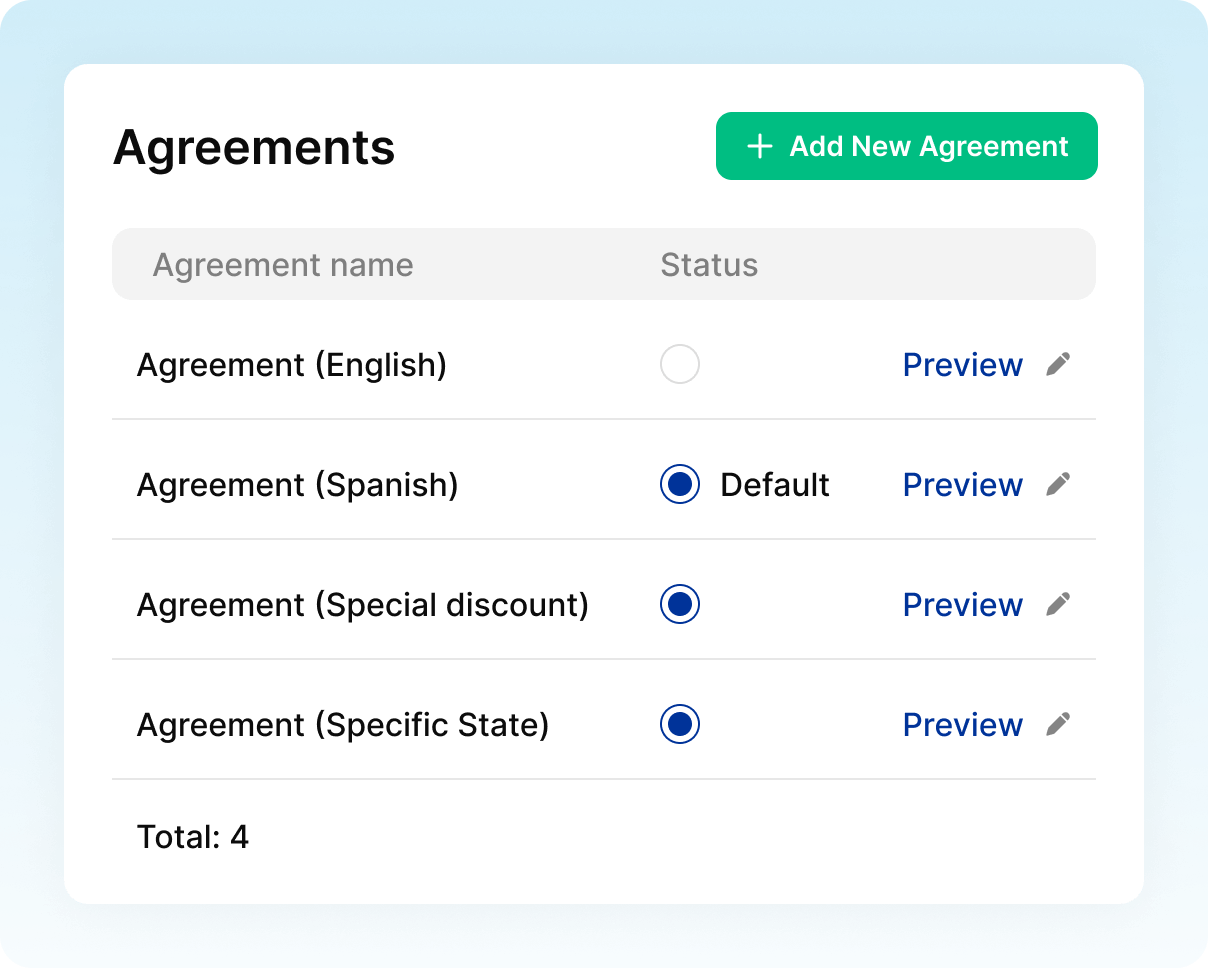
This is a research-based review of public product pages and documentation. Pickora has not used a paid account, submitted disputes, measured time savings or verified credit-score outcomes. Suitability judgments are editorial analysis. The three images are official vendor interface visuals, including simplified presentation graphics; they are not screenshots from a Pickora test account.
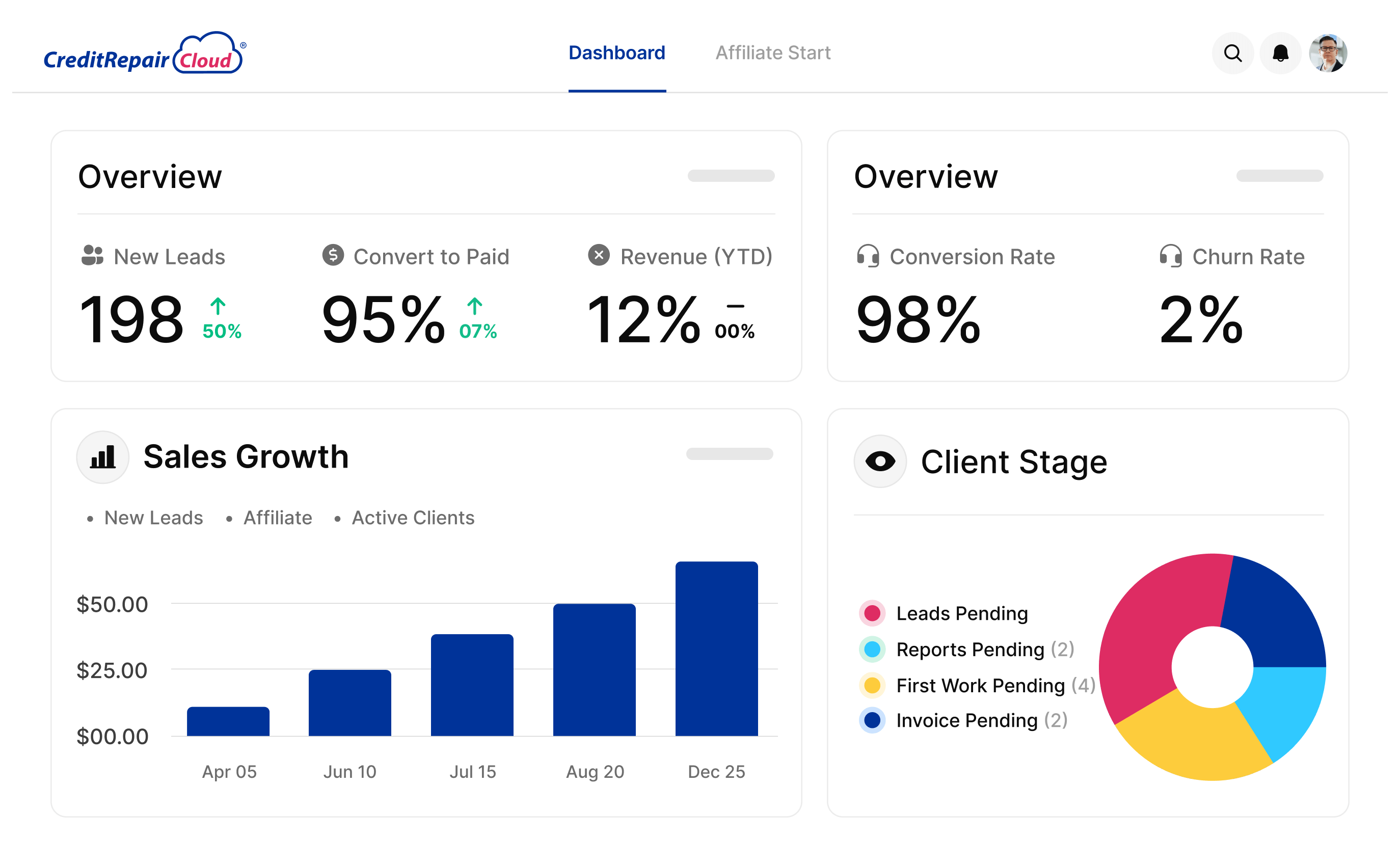
The opening dashboard visual comes from the Credit Repair Cloud homepage. Its conversion, revenue and growth figures are illustrative vendor display data, not typical results or forecasts.
Who should consider it?
Credit Repair Cloud deserves a closer look if you already operate, or are carefully preparing, a US credit repair business and need a shared place to manage client work. The strongest potential benefit is continuity: staff should be able to understand what happened, what remains unresolved and who acts next without rebuilding the story from emails.
A solo operator should be more selective. If your immediate problem is a missing follow-up reminder, specialist software may be more than you need. If your problem is coordinating client records, correspondence and responsibilities across a team, a general task list may leave too much work outside the system.
Consumers looking only to correct their own reports should first read the FTC’s credit repair guidance. The FTC says people can do legally available credit repair themselves for little or no cost, and accurate, current negative information cannot legally be removed through a credit repair service. Buying business software does not change those limits.
Although Pickora serves US and European readers, this review concerns US credit-repair workflows. We have not established suitability for UK or EU credit-reporting systems, consumer-credit rules or data-transfer requirements.
Dispute preparation: useful structure, with a review step
The company’s dispute-feature page describes credit-data importing, a Dispute Wizard and letter-generation tools. These are relevant capabilities for organizing correspondence. Their existence does not prove that a particular dispute is valid or likely to succeed.
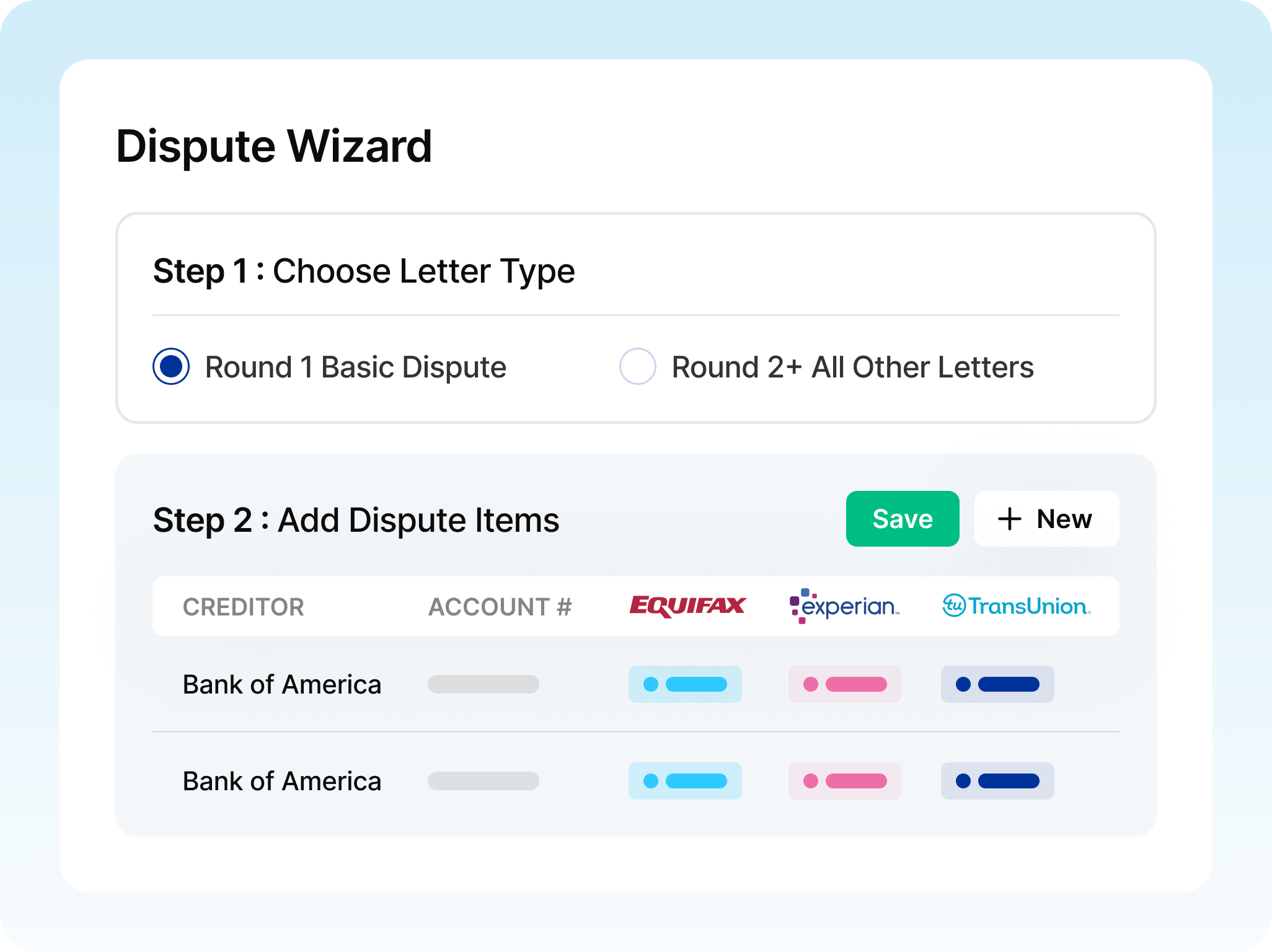
Vendor interface visual: Dispute Wizard. Source: Credit Repair Cloud’s dispute-feature page. The listed accounts are vendor illustration data, not Pickora client cases.
Our evaluation criterion would be traceability. Can the person reviewing a draft connect every statement to the client’s records and supporting information? Can a colleague understand why an item was disputed? A shorter preparation process is valuable only if the resulting file is still accurate and understandable.
Avoid treating “negative” and “inaccurate” as interchangeable. A system can help assemble documents; the operator still needs a sound factual basis for the correspondence it sends.
AI letters need human judgment
Credit Repair Cloud markets Letters by AI alongside its letter library. That may be convenient for producing an initial draft, but Pickora has not evaluated the generated text or the company’s claims about reducing stalled responses.

Vendor interface visual: Letters by AI. Source: official feature page. The image demonstrates controls, not letter accuracy or dispute success.
Before adopting an AI-assisted workflow, decide who checks names, account references, dates, explanations and requested corrections. A polished paragraph can still describe the wrong problem. Staff also need a clear way to reject a draft rather than sending it because the software produced it.
For this reason, we would judge the letter tools by how well they support review and revision, rather than by the number of letters produced. Businesses that cannot allocate that review time should resolve the staffing problem before adding automation.
Team coordination may matter more than the headline features
The business-management page documents task assignment, calendars, role-based permissions and a client portal. Together, these suggest a practical reason to evaluate the platform: reducing uncertainty during handoffs.
For example, a team might want one person to collect documents and another to review correspondence. In an evaluation, check whether each person sees the information needed for that job, and whether the next action remains obvious after reassignment. Those are suggested checks, not results from a Pickora account.
Be cautious about making a dashboard the deciding factor. Attractive charts do not establish that the underlying records are complete or that the business is profitable. Ask which figures your team would actually use to make a weekly operational decision.
Pricing: compare capacity with the work you have
The official pricing table, lists these monthly USD subscriptions:
| Plan | Monthly price | Listed client allowance | Team allowance |
|---|---|---|---|
| Personal | $49 | Up to 3 friends and family members | 1 user |
| Start | $179 | Up to 300 active clients | Up to 3 users |
| Grow | $299 | Up to 600 active clients | Up to 6 users |
| Scale | $399 | Up to 1,200 active clients | Up to 12 users |
| Enterprise | $599 | Up to 2,400 active clients | Up to 24 users |
Annual business plans advertise a 20% discount; monthly-equivalent figures are not monthly billing. Confirm the commitment, taxes, add-ons and final checkout total. Personal has a different scope and is not a substitute for a business plan merely because it costs less.
Capacity is a ceiling, not a reason to buy. A business with a small caseload should ask whether the software removes enough real administrative work to cover its cost. Include any separately required reporting, monitoring, delivery, payment-processing or professional-service expenses in your own budget; Pickora has not verified a complete operating-cost bundle.
The regulatory history belongs in the buying decision
According to the CFPB’s enforcement record, the court entered a stipulated final judgment and order on August 12, 2024, requiring $1 million in civil penalties from Credit Repair Cloud and $2 million from Daniel Rosen. The order addressed assistance to credit repair businesses charging illegal advance fees and required a compliance program.
This is material context for a software buyer. Having billing functionality, a template or vendor training does not establish that your own marketing, contracts and collection practices are lawful. Obtain advice for your actual business model and jurisdictions before activating client billing. This review is software buying analysis, not legal advice.
We do not infer from the historical order that every present user is breaking the law, or that a particular current workflow meets every requirement. Neither conclusion follows from reviewing product pages.
Our verdict
Credit Repair Cloud is worth evaluating when a specialist client workflow is the missing piece in an established or carefully planned operation. Its documented combination of correspondence tools and business administration gives a prospective buyer concrete things to inspect.
Hold off if you are mainly responding to income claims, expect guaranteed score increases, or have not settled how you will handle client information and legal obligations. The subscription should support a workable business process. It cannot supply the evidence that a dispute needs or make an unsuitable business model viable.
Continue with Part 2: the Credit Repair Cloud trial checklist.
Questions & answers
Did Pickora test Credit Repair Cloud with real client disputes?
No. This review is based on official pages, help documentation and regulator sources. Pickora has not measured dispute outcomes, time savings or credit-score changes.
Does buying the software guarantee a credit-score increase?
No. The documented tools do not establish a guaranteed outcome. The FTC says accurate, current negative information cannot legally be removed by a credit repair service.
Is this review a recommendation for UK or EU credit repair businesses?
No. It covers US workflows. Compatibility with other credit-reporting systems, local consumer-credit rules and data-protection requirements has not been established.