At a glance
Choose around the objects you carry and how you retrieve them. Advertised capacity is a starting point, not proof of fit or all-day comfort.
- Write a representative packing list before choosing capacity
- Check the exact laptop sleeve and item dimensions
- Evaluate loaded fit and retrieval, not just an empty bag
- Verify rain protection and airline limits separately
What to look for
Real load
Compare the objects, shapes and weights you carry.
Fit
Evaluate the loaded bag on your body where a return or try-on is available.
Access
Keep frequently used items reachable without unpacking everything.
Use conditions
Check weather protection, care and travel rules against the exact product.
Capacity starts with a packing list
A daypack has to carry particular objects, not an abstract number of liters. Put your ordinary load on a table: water bottle, layer, lunch, charger, notebook and any work equipment. Include the awkward item you sometimes leave out of the photograph. A container may have enough total volume while still making that object difficult to pack.
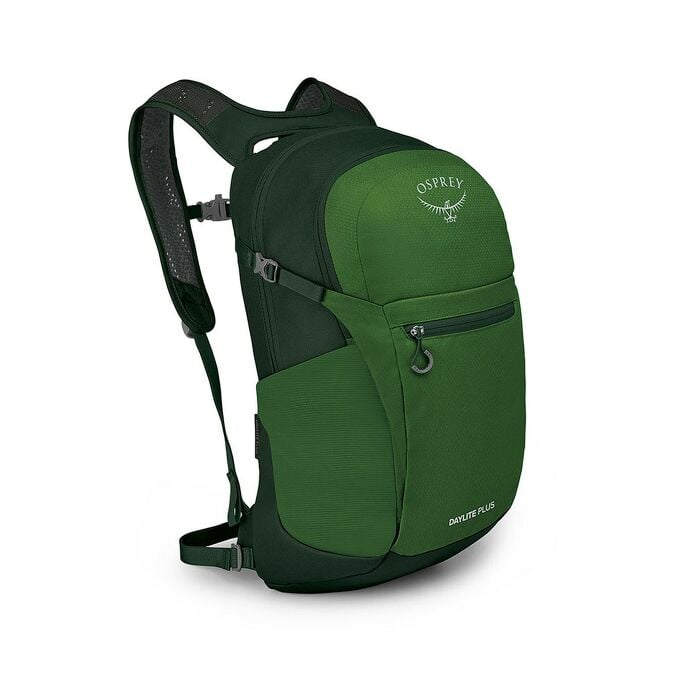
This guide is an editorial buying checklist informed by official documentation checked October 13, 2026. Pickora has not performed a loaded comfort trial, rain test or durability test. The Osprey Daylite Plus listing is used as a documented 20-liter example, not a recommendation that everyone needs that capacity.
Separate commuting from short outings
A commute often prioritizes work equipment and fast access to small items. A short outdoor outing may prioritize water, an extra layer and separation of wet or dirty items. A bag can serve both, but decide which use happens most often before choosing the layout.
Make two packing lists if you expect mixed use. Look for the overlap and the item that changes the requirement. A laptop, bulky lunch container or extra footwear may matter more than a small difference in advertised volume. Avoid assuming a product described as versatile matches every combination.
Check the sleeve against the device
Do not buy on the diagonal screen size alone. Verify the sleeve’s intended use and the device’s actual dimensions, including a case if you carry one. A general-purpose sleeve and a dedicated protective compartment are not automatically the same thing.
Ask how the bag holds the device when placed on the floor and whether the loading path is convenient. We do not infer drop protection from a product photograph. If equipment protection is a requirement, look for explicit documentation and evaluate the relevant arrangement rather than relying on marketing language.
Evaluate the bag with a realistic load
Where possible, try the bag with representative contents. Adjust it according to its instructions, walk normally and check whether straps, the loaded shape or access points create friction. An empty bag can feel quite different from the arrangement you intend to carry.
Consider retrieval as well as carrying. Can you reach the item you use repeatedly without removing everything above it? Can you manage the bottle pocket and zip while wearing your usual outer layer? These are proposed fit checks, not results from a Pickora trial.
Pickora editorial illustration. It does not show an Osprey sleeve or establish device fit.
Verify travel and weather requirements separately
Twenty liters does not mean airline-approved. Check your airline’s current personal-item or cabin rules against the packed bag dimensions and the fare you purchased. Product capacity and airline allowance answer different questions.
Likewise, do not interpret an everyday outdoor description as a waterproof claim. Read the exact material and weather-protection information. Decide how you will protect items that cannot get wet and what you will do with damp contents after use. A rain cover, where relevant, is another arrangement to verify rather than assume is included.
Buy the arrangement you will keep using
Before checkout, review care instructions, return terms and the model variant. Color and season changes can accompany different materials or details, so make sure the specifications describe the product actually in the basket. We avoid universal price bands because local stock and offers vary.
Our buying rule is to choose the smallest workable arrangement that comfortably accommodates your realistic load, rather than minimizing liters at all costs. The Daylite Plus provides one concrete reference point; your packing, fit and access checks should decide whether that example—or a different bag—belongs in your daily routine.
Useful resources
Osprey Daylite Plus
A documented 20-liter example for comparing compartment layout; not a universal size recommendation.
Questions & answers
Does 20 liters guarantee laptop fit?
No. Check the exact sleeve and device dimensions, including any case, as well as the documented protection.
Does a daypack capacity establish airline approval?
No. Check the current airline allowance, fare and packed bag dimensions separately.