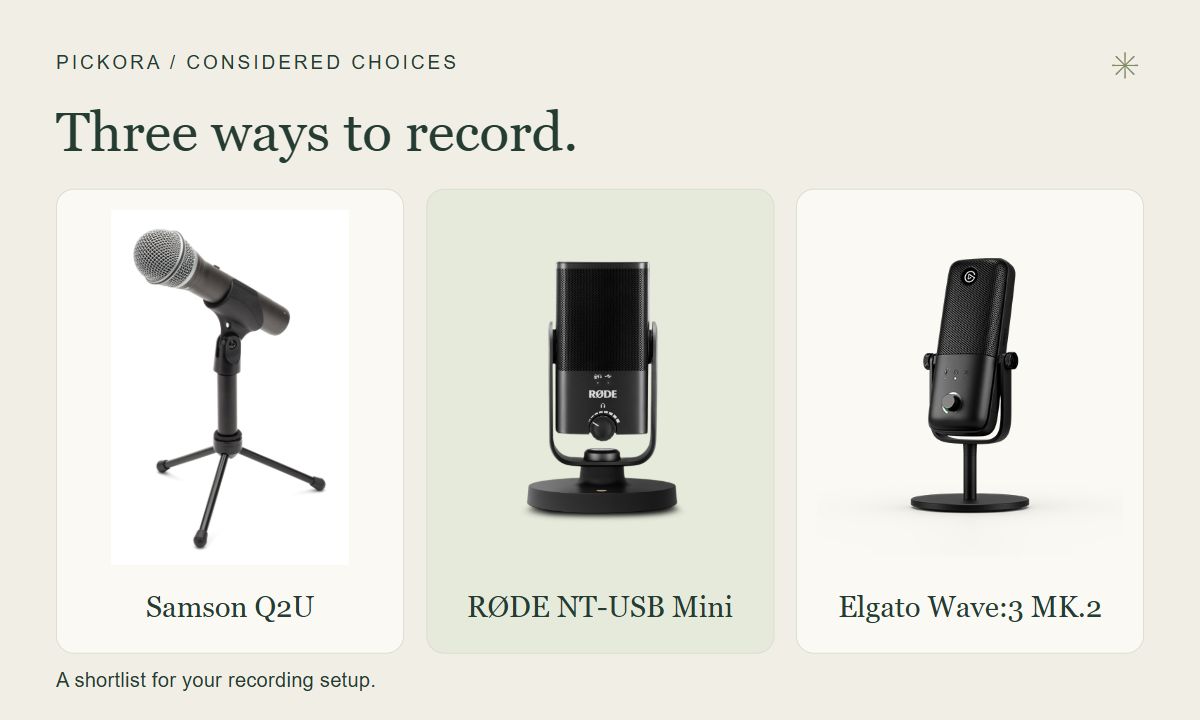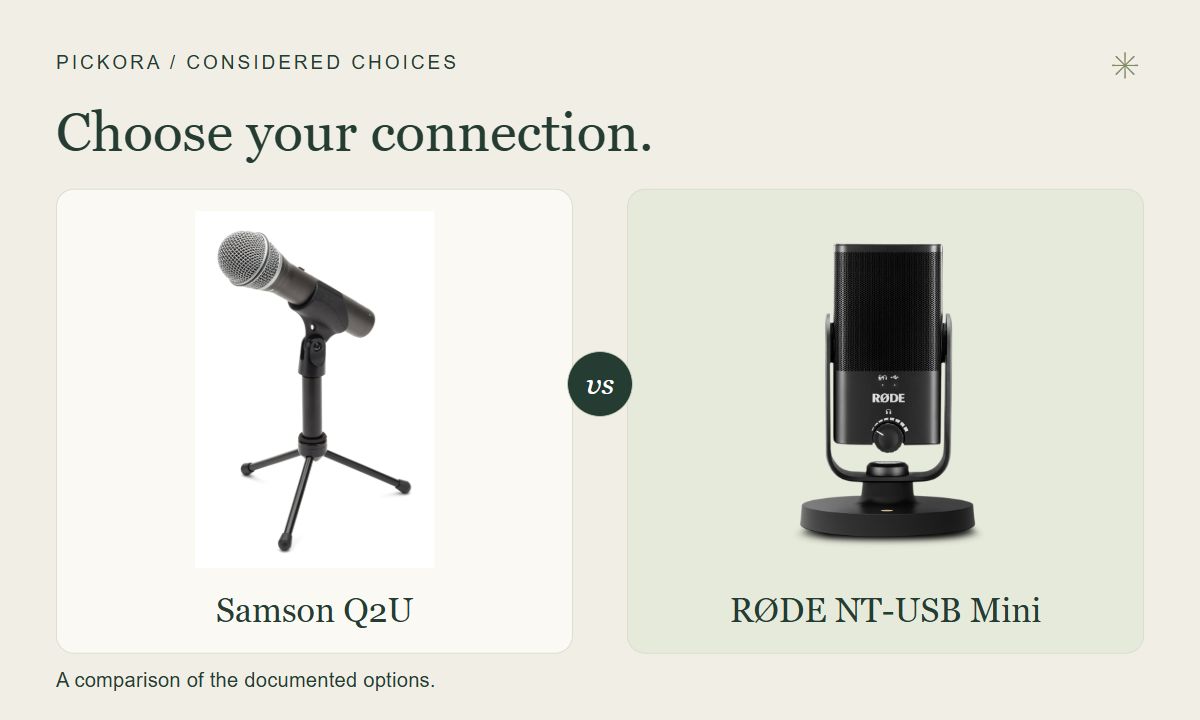
At a glance
Choose the signal path and physical arrangement first, then evaluate a recording. We have no listening-test evidence to name a sound-quality winner.
The comparison
Choose Samson Q2U: Q2U if an XLR connection is part of your future plan.
Choose RØDE NT-USB Mini: NT-USB Mini if a compact USB desk setup is the priority.
| Criterion | Samson Q2U | RØDE NT-USB Mini |
|---|---|---|
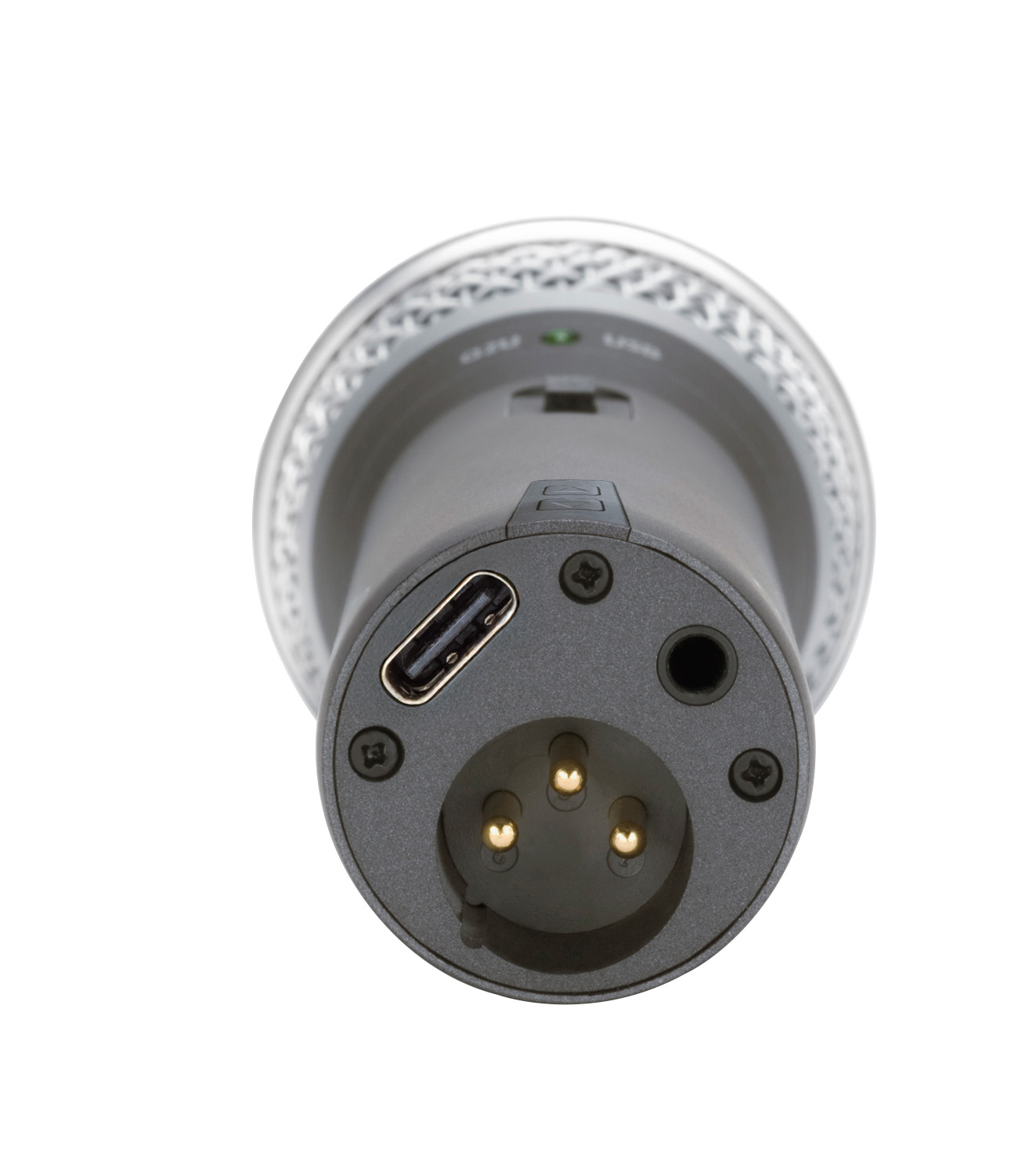
| Outputs | USB and XLR | USB |
| Capsule and pickup | Dynamic, cardioid | Condenser, cardioid |
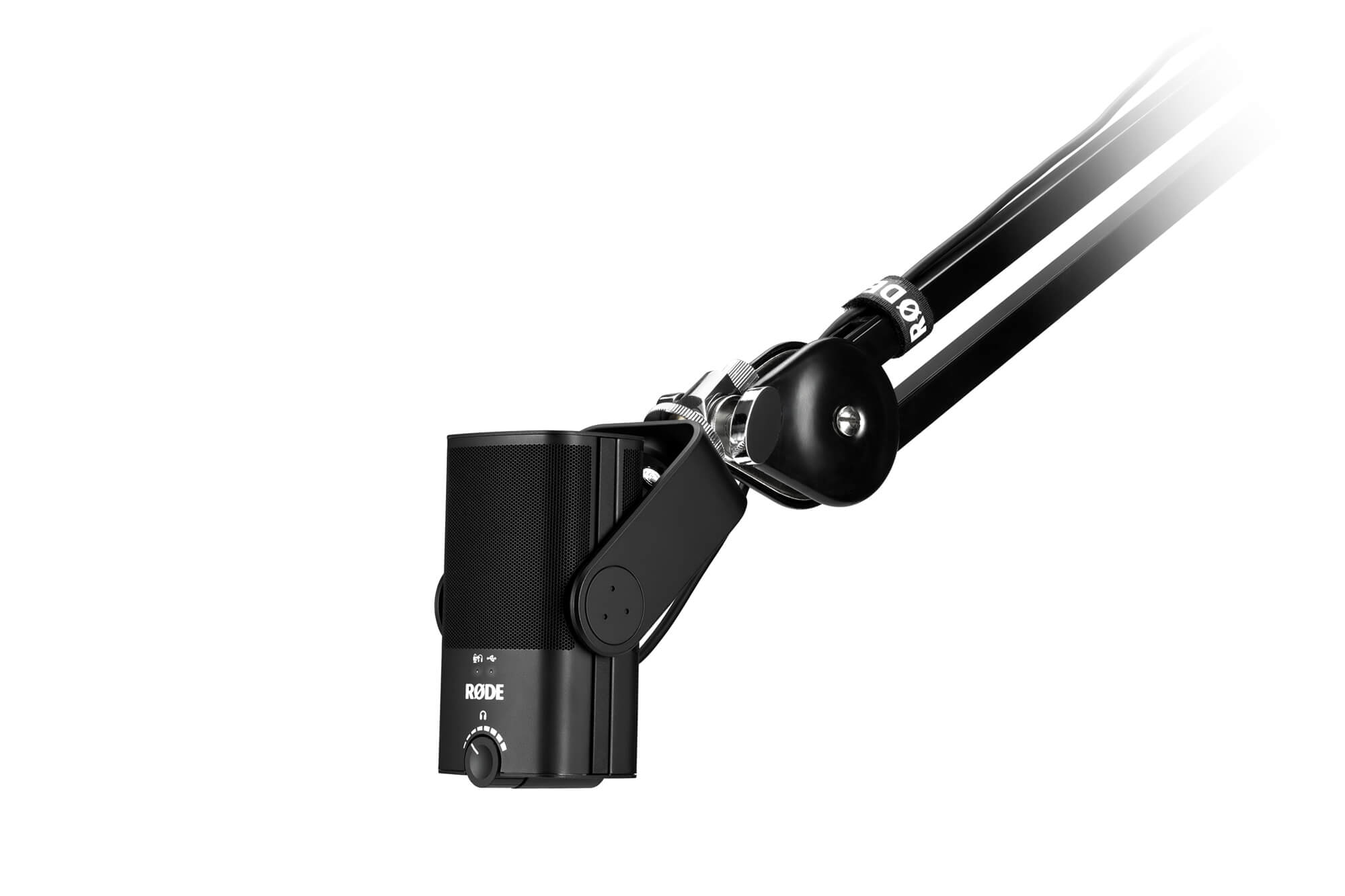
| Desk arrangement | Handheld body with included tripod and clip | Compact body with magnetic desk stand |
| Headphones | 3.5 mm monitoring output | Headphone monitoring |
Samson Q2U
Best for: A USB start with a possible later XLR workflow
A dynamic handheld microphone with USB and XLR outputs.
RØDE NT-USB Mini
Best for: A compact USB-centered desk setup
A compact USB condenser microphone with a detachable magnetic desk stand.
Outputs
Check the exact Q2U connector generation before buying.
Capsule and pickup
Type alone does not establish real-world noise rejection or sound quality.
Desk arrangement
Budget space for placement, cable routing and optional mounting.
Headphones
Check the recording software and operating system workflow as well.
Who should choose each option?
Samson Q2U: You expect to connect to an XLR interface or mixer; The handheld form and supplied mounting kit suit your space
RØDE NT-USB Mini: You want a small USB microphone on a desk; You want to investigate the documented RØDE Connect workflow
Begin with where the cable will go
For a first spoken-word setup, both products look approachable. The more useful distinction is how each fits the equipment you intend to use. Samson’s current Q2U page lists USB and XLR outputs, a dynamic cardioid capsule and headphone monitoring. RØDE’s NT-USB Mini page describes a compact USB condenser microphone and magnetic desk stand.
This comparison is based on manufacturer documentation checked October 13, 2026. Pickora has not recorded matched samples, measured noise or compared these microphones in the same room. Terms such as clearer, warmer or more professional would require evidence we do not have.
The Q2U offers a different expansion route
An XLR output can matter if you expect to use an audio interface or mixer later. It does not mean you must purchase that equipment on day one, or that adding an interface automatically improves every recording. First decide what the extra equipment would enable: another input, a specific routing arrangement or a workflow you already need.
The current Samson listing identifies USB-C, while older Q2U units and retail photos may show a different connector. Check the exact unit, included cable and retailer description. Do not assume a product name guarantees the same connector generation across all remaining stock.
The NT-USB Mini favors a compact USB setup
RØDE’s documentation describes a small body, detachable magnetic stand and RØDE Connect integration. That gives you a concrete workflow to investigate if the microphone will stay near your computer. Verify your operating system and any software you plan to use before treating a demonstration as your complete setup.
An included desk stand also does not settle microphone position. The useful position is the one that works with your speaking posture, camera framing and desk activity. If an arm or different stand is needed, include it in the cost and check the documented mounting arrangement.
Capsule type is not a room test
Dynamic versus condenser is a real specification difference, but it does not by itself prove how much keyboard noise, room echo or traffic either setup will capture. Placement, speaking distance, gain and the room all matter to the recording you produce.
The sensible trial is a short sample at your desk: ordinary speech, a quiet pause and your typical desk activity. Listen without heavy processing first. Then decide whether the result meets the actual job. This is a proposed evaluation, not a sample Pickora has recorded.
Count the whole setup
Compare the microphone, mounting, cables and any interface or software requirement as one purchase. A microphone that appears inexpensive can become a different proposition if your planned workflow needs additional hardware. Conversely, an XLR path has little immediate value if you never intend to use it.
Check availability and returns in your region. We do not quote a single universal price because the reviewed manufacturer pages and local retail offers are not the same market. A sale price should not override a connector or mounting mismatch.
Our conditional recommendation
Evaluate the Q2U when its USB/XLR flexibility is part of a real plan. Evaluate the NT-USB Mini when a compact USB-centered desk arrangement is the better fit. Choose between those documented differences first, then validate the recording in your own space. Neither product earns a sound-quality crown from specifications alone.
Questions & answers
Which microphone sounds better?
We do not have matched recording evidence to answer that. This comparison evaluates documented connections, mounting and workflow.
Will every Q2U have the connector shown in current documentation?
Check the exact retail unit and supplied cable. The current Samson page lists USB-C, while older stock and photographs can differ.